


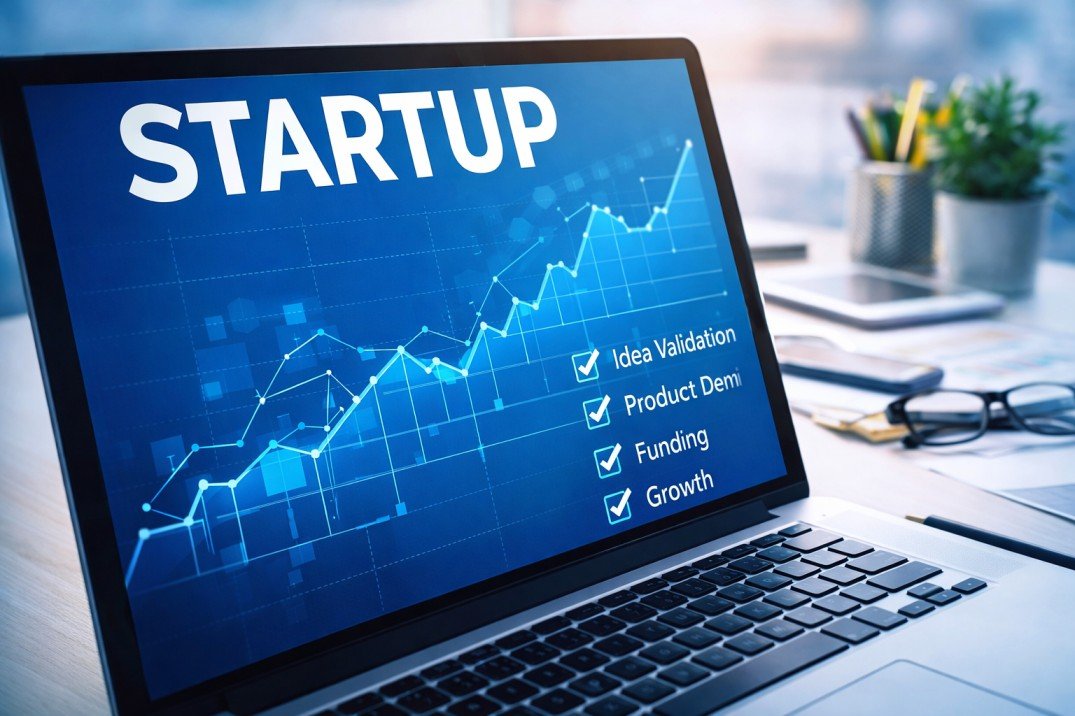
Many people believe startups succeed very quickly, but most of them grow slowly and quietly over time. Behind every useful app or digital platform, there is usually a small team trying to solve a very ordinary problem in a better way.
Technology startups usually appear when existing solutions no longer meet user expectations or feel inefficient. Processes become slow, services feel outdated, and users start looking for better alternatives.
Where Startup Ideas Actually Come From
In reality, founders rarely start with a complete plan. The idea often develops step by step. Something feels inefficient or frustrating, and instead of ignoring it, a founder starts paying attention.
Simple questions slowly shape the idea. Research and planning come later, but the starting point is almost always real-life observation.
What actually defines a technology startup
A company does not become a startup because of its size, but because of how it uses technology to solve a problem. Some startups build mobile apps, others create web platforms, and some work on background systems that users never directly see.
The common factor is efficiency. Technology allows these companies to improve speed, reduce cost, or simplify access.
The reality of building the first product
Early versions of startup products are usually simple and sometimes disappointing. Features are limited, designs feel unfinished, and performance may be inconsistent.
At this stage, honest user feedback is usually more helpful than trying to make everything perfect. Small improvements over time create real progress.
Why the Early Stage Feels Difficult
Limited resources force founders to handle many roles at once. Technical work, customer communication, and marketing often happen simultaneously.
There is also emotional pressure. Uncertainty becomes part of daily routine, and progress can feel slow.
Building visibility and trust online
Even strong products struggle if people cannot find them. A clear website, honest messaging, and useful content help build trust gradually.
Instead of aggressive promotion, many startups focus on explaining problems clearly and offering practical solutions.
Different growth paths
Many startups never plan to become global companies, and that choice is often intentional. Some prefer steady growth and long-term stability.
Technology makes flexibility possible. Products can change direction, refine features, or target new users without starting from zero.
Looking ahead
Technology will continue to evolve, but human needs remain similar. Speed, clarity, and convenience will always matter.
Startups that focus on real needs instead of trends are more likely to survive.
Final thoughts
Building a technology startup is rarely a quick process and usually requires long-term effort. It involves learning, adjustment, and patience. Understanding this reality helps set realistic expectations and appreciate the value of steady progress.
